Licensed and Insured. Holding permits through the MN DNR
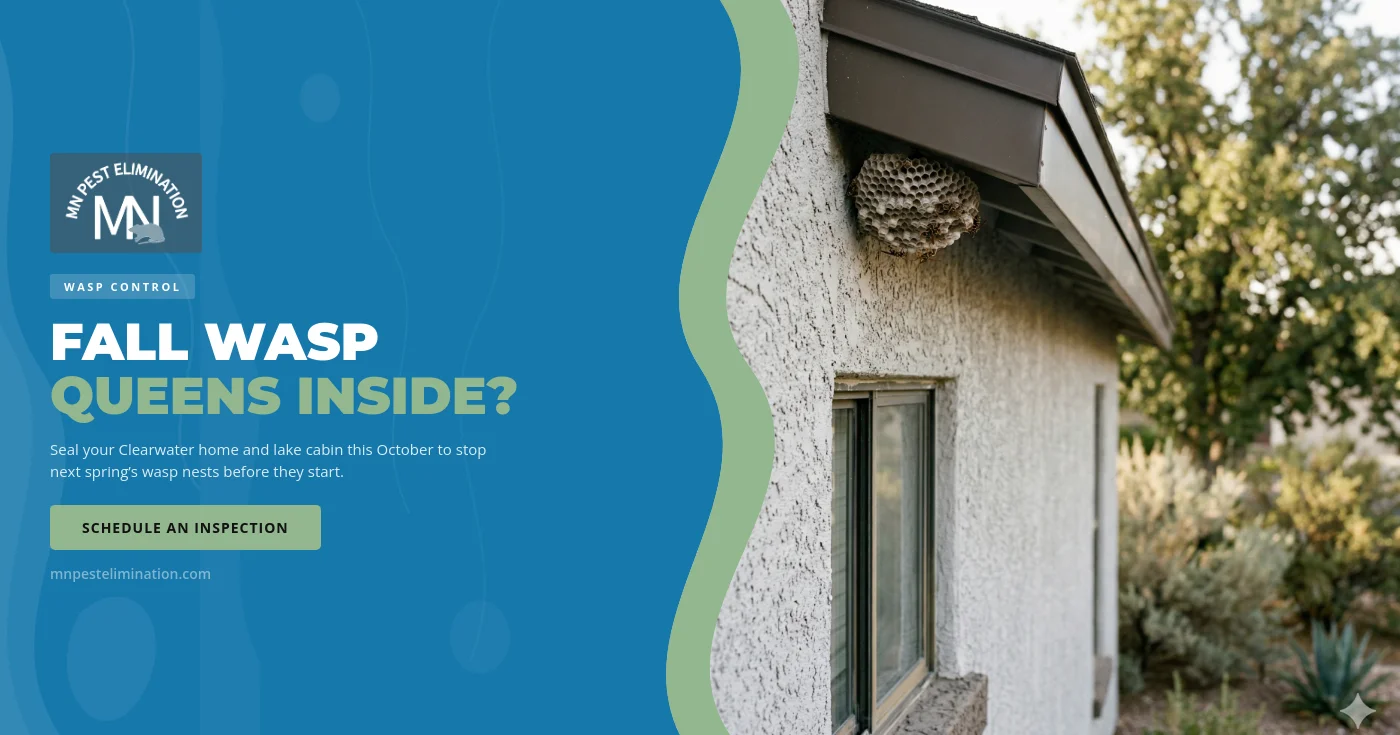
It’s a sunny October afternoon in Clearwater, and a slow, groggy wasp is crawling up your living room window. By evening there’s another one circling the kitchen light. If that sounds familiar, you’re seeing the start of the overwintering season. Now is the best time to think about overwintering wasp control, before those visitors turn into next spring’s nests.
Every fall, wasp queens across central Minnesota look for a protected place to spend the winter. Homes along the Mississippi and the lake cabins nearby give them exactly what they want: wall voids, attics, soffits and tiny gaps behind siding. Here at MN Pest Elimination, we get these calls every October, and the pattern is always the same. A few wasps indoors now usually points to queens hiding in the structure around your living space.
In this guide we’ll explain why wasps show up indoors in fall and what happens to a colony as the weather turns. We’ll also cover where queens hide, the warning signs to watch for, why sprays fall short and how fall sealing stops spring nests before they start.
October in central Minnesota swings back and forth. Frost often arrives around late September or early October, and then a run of warm, sunny days follows. Those warm spells are when homeowners start noticing wasps in walls in fall, buzzing at windows or dropping from the ceiling.
Mated queens spend late summer and early fall searching for shelter. They squeeze into cracks around siding, window trim, fascia boards and utility lines, then settle into wall voids and attics. The sun can heat a south- or west-facing wall, or your furnace can warm the space behind the drywall. Either way, the queens wake up and crawl toward warmth and light. Sometimes that path leads them out through an outlet, a light fixture or a gap around trim and into your living room.
The wasps you see indoors are rarely the whole story. For every queen that wanders into a room, others may be tucked deeper in the structure. That’s why we treat indoor sightings as a clue rather than the whole problem.
Frost and freeze dates shift from year to year. If you want local averages, the Minnesota State Climatology Office keeps helpful records.
A summer yellowjacket or paper wasp colony can feel endless, but it’s built to last a single season. According to the University of Minnesota Extension, the workers and males of social wasps such as yellowjackets, paper wasps and bald-faced hornets die off once hard frosts arrive. Only the newly mated queens survive the winter.
For the most part, yes. By late October, most outdoor nests are empty or nearly so. The old paper nest generally isn’t reused the following year. Still, a sheltered spot that worked once can draw a new queen to build nearby.
Wasp queens overwintering in your home are the start of next year’s problem. Each surviving queen comes out around April or May. She finds a spot under an eave, deck or dock and starts a brand-new nest by herself. By midsummer, that single queen can be leading a colony of hundreds.
That’s the logic behind overwintering wasp control. Every queen you keep out of your walls and attic this fall is one less nest to deal with next summer. Paper wasps are the ones most often found inside homes in fall. Yellowjacket queens more often spend the winter outdoors, but they do sometimes end up in wall voids.
Queens want three things: protection from wind, steady temperatures and a tight space. Outdoors, that might be loose bark, leaf litter or a rotting log. Around your home, the options are far more appealing.
When we inspect for wasps in attic spaces across Minnesota, we often find them grouped near the warmest parts of the roofline. If your attic insulation is matted, damaged or full of old pest debris, consider attic insulation and cleanup at the same time you seal entry points.
Seasonal cabins near Clearwater Lake and Lake Augusta get closed up in October, right when queens are searching for shelter. They sit unheated and quiet for months, and many have older siding and screen porches with plenty of gaps. Owners often open up in April or May to find drowsy wasps on the windowsills, just as new nests begin under the eaves and along the dock. If you have a cabin, seal it against overwintering wasps before you close it for the season.
Most homeowners don’t find overwintering queens by inspecting the attic. They find them by accident. Watch for these signs:
These groggy queens move slowly and rarely sting unless someone grabs, steps on or squeezes them. That can still happen, especially with kids or pets around. If you find one, a vacuum or a fly swatter does the job. There’s no need to fog the room.
Wasps coming out of walls on warm fall days usually mean there’s an open pathway between a wall void and your living space. Make a note of where they appear. That helps us track down the entry points outside.
There’s some reassurance here, too. Queens that end up in your living space generally don’t start a nest indoors. Most die because the air is too dry and there’s nothing to eat. The bigger concern is the queens that stay hidden in the structure and slip back outside in spring.
It’s tempting to grab a can of spray the moment a wasp appears. Unfortunately, insecticide sprayed inside the living space doesn’t reach queens tucked into wall voids or deep in attic insulation. You end up treating the room, not the problem.
Another common instinct is to caulk every crack you can see indoors, but that can backfire. Sealing from the inside traps insects in the void. From there, they either find another way into your rooms or die in place. Dead insects inside walls can attract carpet beetles and other scavengers, which creates a second problem.
A steady stream of wasps going in and out of a hole in your siding during warm weather may mean there’s an active nest in the wall. Plugging that hole is risky. The wasps may chew through drywall looking for another exit, which can put them right inside your home. This job calls for a professional who can treat the nest first and then seal the opening.
Here at MN Pest Elimination, we focus on what works for overwintering wasp control. We find where wasps are getting in, handle active nests properly and seal from the outside. A vacuum takes care of the stragglers indoors while the real fix happens on the exterior.
The most effective fall wasp control Clearwater MN homeowners can invest in is exclusion, which means closing the gaps queens use to get in. Ideally, that work happens from late summer into early fall, before cold weather drives queens indoors. Even in October, though, sealing the exterior still pays off for next year.
Our exclusion services are built around this approach. Paper wasp exclusion overlaps with keeping out other fall invaders, so the same work helps with spiders, boxelder bugs and even rodents looking for winter shelter.
If you own a lake cabin, schedule sealing before you close it for the season. An exterior inspection and exclusion visit in September or early October can mean opening day next spring without wasps on every windowsill. Keeping wasp queens out of your attic for winter works the same way. Seal from the outside, screen the vents and deal with any active nests first.
Queens are looking for protected spots to spend the winter. On warm days, or when your heating system warms the walls, they crawl toward light and warmth and can end up in your rooms.
It’s possible. More often, though, queens leave the attic in spring and build outdoors under nearby eaves, decks or soffits. Either way, sealing now reduces the number of queens that survive close to your home.
They’re far less aggressive than summer workers, but they can still sting if pressed against skin. Use a vacuum or swatter rather than your hands.
Late summer through early fall is ideal, before hard freezes typically arrive in mid to late October. If you’ve missed that window, sealing now still protects your home for next season.
Workers and males do. Only mated queens survive, and they shelter until spring. That’s why fall is the season to focus on them.
A few sleepy wasps on the window in October might not seem like much, but each one is a sign that queens are settling in for winter. Overwintering wasp control done now means sealing gaps, screening vents and handling active nests properly. The result is fewer nests around your home, deck and dock next summer.
Here at MN Pest Elimination, we’re based in Waverly and serve homes, cabins and businesses throughout Clearwater, Annandale, Buffalo, Rockford, Montrose, Delano, Howard Lake and Hanover. Let our team look over your home or cabin before winter sets in. Contact us today to schedule your fall inspection and head into spring with fewer wasps to worry about.
Every October we hear from homeowners who are finding slow, groggy wasps on their windows, ceilings and light fixtures. Those visitors are usually mated queens looking for a sheltered place to spend the winter. Each queen that survives can start a brand-new nest next spring. We focus on keeping them out of your walls and attic in the first place.
Our fall wasp service starts with a careful exterior inspection. We look for the gaps queens use and handle the fix from the outside, where it actually works:
We also help lake cabin owners seal up before closing for the season. That way, opening day in spring doesn’t start with wasps on every windowsill. The same exclusion work helps keep out spiders, boxelder bugs and rodents looking for winter shelter, too.
Want the full picture of why wasps move indoors in October and how fall sealing prevents next year’s nests? Read our complete guide to overwintering wasps, then reach out to schedule your inspection before the cold sets in.